Lorem ipsum dolor sit amet consectetur adipiscing elit faucibus interdum, urna sapien ridiculus turpis arcu tortor rhoncus commodo, fusce felis...

Pickup currently not available
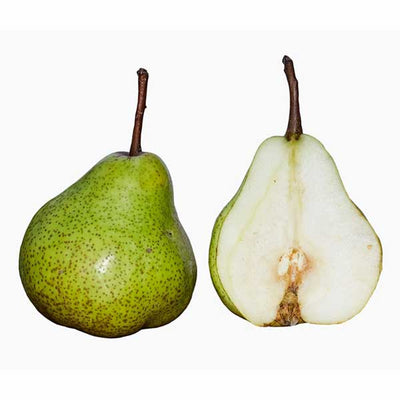
The pear is native to coastal and mildly temperate regions of the Old World, from western Europe and north Africa east right across Asia. It is a medium-sized tree, reaching 10–17 metres (33–56 ft) tall, often with a tall, narrow crown; a few species are shrubby. The leaves are alternately arranged, simple, 2–12 centimetres (0.79–4.72 in) long, glossy green on some species, densely silvery-hairy in some others; leaf shape varies from broad oval to narrow lanceolate.
Most pears are deciduous, but one or two species in southeast Asia are evergreen. Most are cold-hardy, withstanding temperatures between −25 °C (−13 °F) and −40 °C (−40 °F) in winter, except for the evergreen species, which only tolerate temperatures down to about −15 °C (5 °F). The flowers are white, rarely tinted yellow or pink, 2–4 centimetres (0.79–1.57 in) diameter, and have five petals.[3] Like that of the related apple, the pear fruit is a pome, in most wild species 1–4 centimetres (0.39–1.57 in) diameter, but in some cultivated forms up to 18 centimetres (7.1 in) long and 8 centimetres (3.1 in) broad; the shape varies in most species from oblate or globose, to the classic pyriform 'pear-shape' of the European pear with an elongated basal portion and a bulbous end.
To maintain the beauty and integrity of your purchase, we recommend treating it with care. Simple maintenance practices, such as gentle washing and proper storage, can effectively preserve the longevity of your favorites. We encourage you to refer to the care instructions included with each item, designed to help you keep your purchase in top condition.
Our dedication to excellence extends beyond materials; it encompasses the artistry and craftsmanship illustrated in every piece we create.